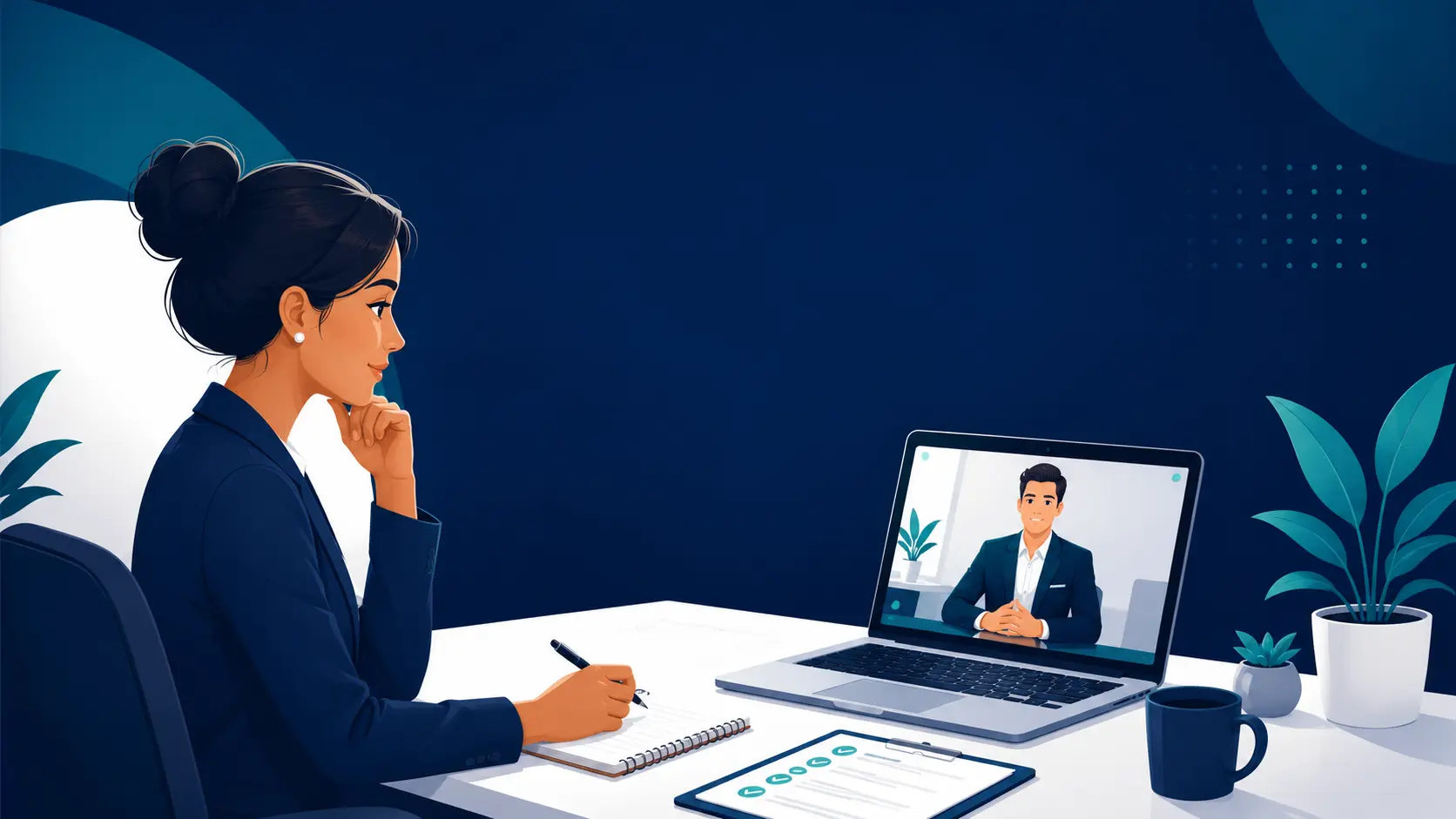

Your answers may be perfect and your experience strong, yet you walk out of the interview leaving a negative impression without knowing why. The truth many people overlook is that a recruiter doesn't just listen to your words — they read your body the entire time. Studies in communication science suggest that a large share of our messages comes through tone and body language rather than the words themselves. This means the way you sit, your gaze, and your hand movements may say more about you than you imagine.
In this guide, we'll uncover the common body language mistakes that cost you the job without you realizing it, and how to control your non-verbal signals to send a message of confidence and professionalism, whether your interview is in person or remote. And if you haven't prepared for the interview in general yet, start first with our guide on how to prepare for a job interview step by step.

✍️ "Your words tell the recruiter who you are, but your body tells them whether you believe what you're saying. Confidence isn't only heard — it's seen."
Why Does Body Language Matter So Much?
In the first few seconds of the interview, before you've even said a full sentence, the recruiter has already formed an initial impression of you based on your appearance and the way you enter and sit. This first impression is hard to change later, so the interview effectively begins the moment you arrive, not at the first question. Positive body language reinforces your words and makes them more credible, while tense body language can contradict your strong answers and plant doubt in the recruiter's mind. In short, the harmony between what you say and what your body shows is what creates a convincing presence.
1. Weak Eye Contact
Eye contact is one of the strongest signals of confidence. Avoiding it suggests shyness, dishonesty, or a lack of interest, while overdoing it (constant staring) can come across as aggressive. Balance is the solution: maintain a natural gaze with the recruiter while they speak and while you speak, and look away briefly and naturally now and then. In panel interviews, distribute your gaze among everyone rather than one person. In remote interviews, look at the camera lens rather than the screen, because that creates a sense of direct connection for the other side.
2. Slouched or Lazy Posture
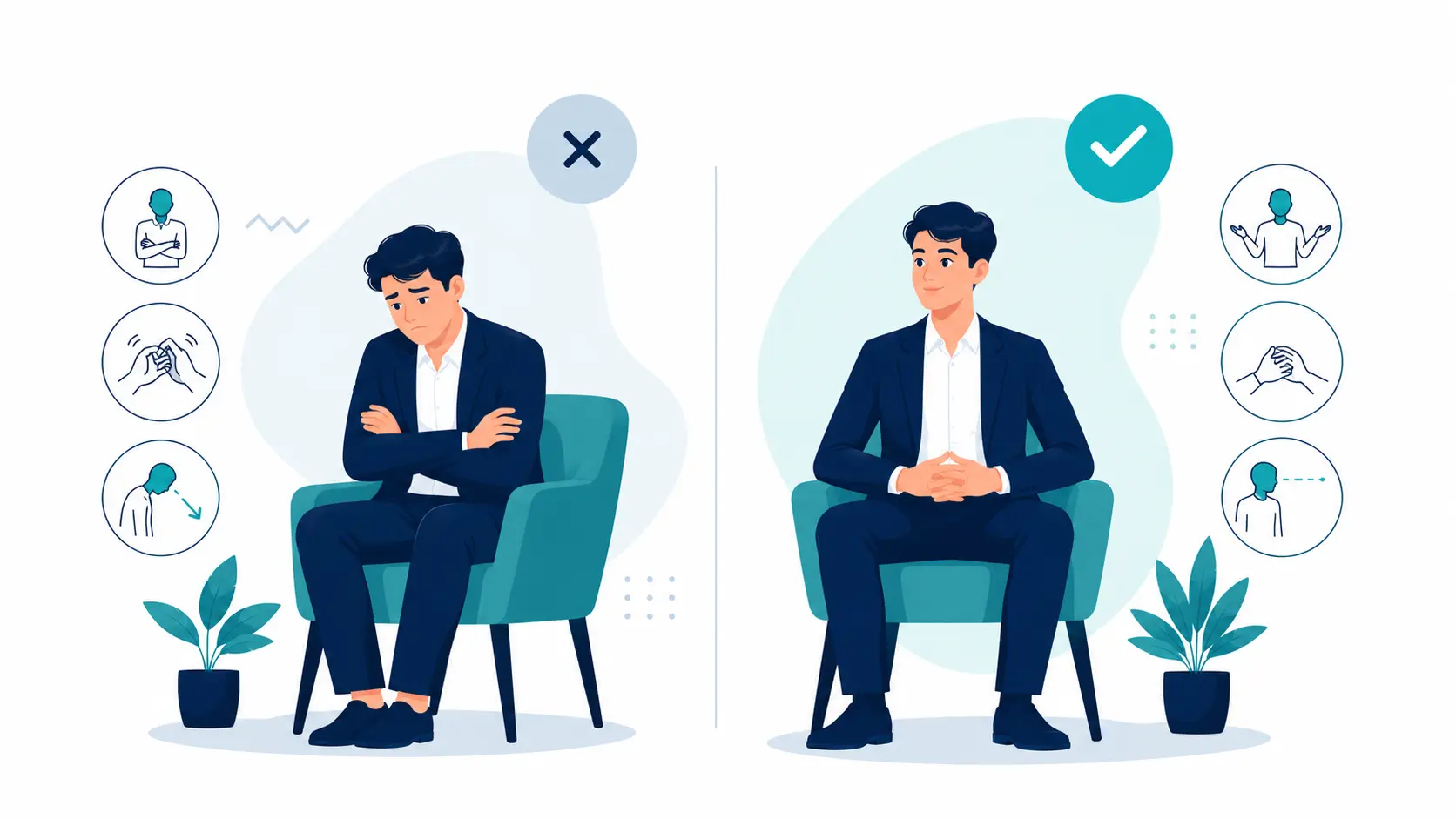
The way you sit sends an immediate message about your confidence and discipline. Leaning forward excessively, or slouching back, suggests laziness or indifference. The ideal posture is sitting upright with a straight back and relaxed shoulders, leaning slightly forward when listening to show interest. This posture not only sends a message of confidence but also helps you breathe better and speak more clearly.
3. Nervous Hand Movements
The hands are among the body parts that most expose your nervousness. Playing with a pen, rubbing your hands, or clasping your fingers tightly are all anxiety signals a recruiter easily picks up. On the other hand, moving your hands too much can be distracting. It's best to keep your hands calmly on the table or in your lap, and use them with simple, natural gestures that support your words without exaggeration. A calm, open hand sends a message of honesty and openness.
4. Crossing Your Arms
Crossing your arms over your chest is one of the most common mistakes, suggesting closedness, defensiveness, or discomfort, even if you do it merely to feel at ease. This posture creates a psychological barrier between you and the recruiter. Keep your arms in an open, relaxed position, as this reflects your openness, confidence, and readiness for dialogue.
5. Rigid or Exaggerated Facial Expressions
Your face is a mirror of your engagement. Rigid, emotionless expressions suggest coldness or tension, while an exaggerated, forced smile looks insincere. What's needed is a natural smile at the right moments, and expressions responsive to the conversation that show you're present and attentive. When the recruiter talks about the company, show genuine interest in your features, as this builds a human bridge of connection.
6. Speaking Pace and Tone of Voice
Although tone of voice isn't body language in the literal sense, it's an essential part of non-verbal communication. Speaking too fast suggests tension and makes you hard to follow, while speaking too slowly can seem hesitant. Speak at a moderate, clear pace, and allow yourself short pauses to think rather than filling the gap with words like "um" and "uh." A confident, balanced tone reinforces every word you say.
Table: Body Language Mistakes and the Message They Send
Mistake | The Message the Recruiter Receives |
|---|---|
Avoiding eye contact | Shyness or dishonesty |
Slouched posture | Indifference and low interest |
Crossed arms | Closedness and defensiveness |
Nervous hand movements | Tension and anxiety |
Rigid face | Coldness and disengagement |
Fast, stammering speech | Loss of control and confidence |
Body Language in Remote Interviews
Remote interviews have become an essential part of hiring in 2026, and they have their own body language rules. Here are the most important:
Look at the camera: Not at your own image or the recruiter's on screen, as this equals direct eye contact.
Adjust the camera level: It should be roughly at your eye level, not from below or above.
Sit upright in front of the screen: Keep your upper body visible so the recruiter can see your gestures.
Mind the lighting and background: Clear front lighting and a tidy background reflect your professionalism.
Avoid excessive movement: Swaying or moving closer to and away from the camera distracts the viewer.
How to Practice Confident Body Language
Body language is a skill acquired through practice, not instinct. Record yourself on video answering common questions, then watch your posture, gaze, and hand movements. You'll be surprised by habits you weren't aware of. Practice in front of a mirror or with a friend who gives you honest feedback. With repetition, confident postures turn into a natural habit you don't need to think about during the real interview. Remember that the goal isn't to act out a character, but to show your most confident and comfortable self.
Quick Tips Before Entering the Interview
In the final moments before the interview, apply these simple steps to align your body language:
Take several deep breaths to calm your nerves before entering.
Stand upright for a minute, as a confident posture actually raises your sense of confidence.
Enter with a calm smile and a steady step.
Shake hands with moderate confidence (in in-person interviews).
Sit after you're invited to, upright and without slouching.
Important Cultural Considerations in Body Language
Body language isn't the same across all cultures, and what's considered polite in one place may be inappropriate in another. In the Saudi and Gulf work environment, respect and composure in non-verbal signals are valued. For example, moderate eye contact is a sign of respect, but prolonged staring may be understood differently, especially in mixed interviews. Likewise, a handshake is usually given with moderate firmness, and it's important to be mindful of and respect personal space. A calm smile and active listening leave a positive impression in most work settings. The general rule is to carry yourself with composure and respect, to read the other party's signals, and to respond to them with flexibility — cultural awareness itself is proof of your professional maturity.
How to Turn Your Body Language From a Burden Into an Asset
Many people treat body language as an enemy to be suppressed, when it can be your strongest ally if you use it intelligently. When your non-verbal signals align with your words, the power and credibility of your message multiply. For example, when you talk about an achievement you're proud of, let your face reflect that pride with a calm smile and bright eyes, and the recruiter will believe you more. When you listen to an important question, nod slightly to show your engagement. And when you answer a tough question, keep your hands calm and your tone clear to project confidence despite the difficulty. This way, your body language turns from a source of anxiety into a tool that supports everything you say and leaves an impression far deeper than words alone.
Final Thoughts
Body language isn't a minor detail in the interview — it's half the message that reaches the recruiter. You can easily control your words, but your body reveals how you truly feel unless you've trained yourself to manage it. Maintain balanced eye contact, a confident posture, open arms, calm hands, responsive expressions, and a steady tone. These small details combined create a convincing presence that supports your experience and leaves a positive impression that lasts after the interview ends.
And because a successful interview begins with thorough preparation, also review our guide on the top 20 interview questions and how to answer them. For more trusted guidance on interview skills, you can visit the LinkedIn Help Center.
Start exploring the latest job opportunities on NabdJobs, and walk into your next interview with confidence that speaks for you before you even say a word.