

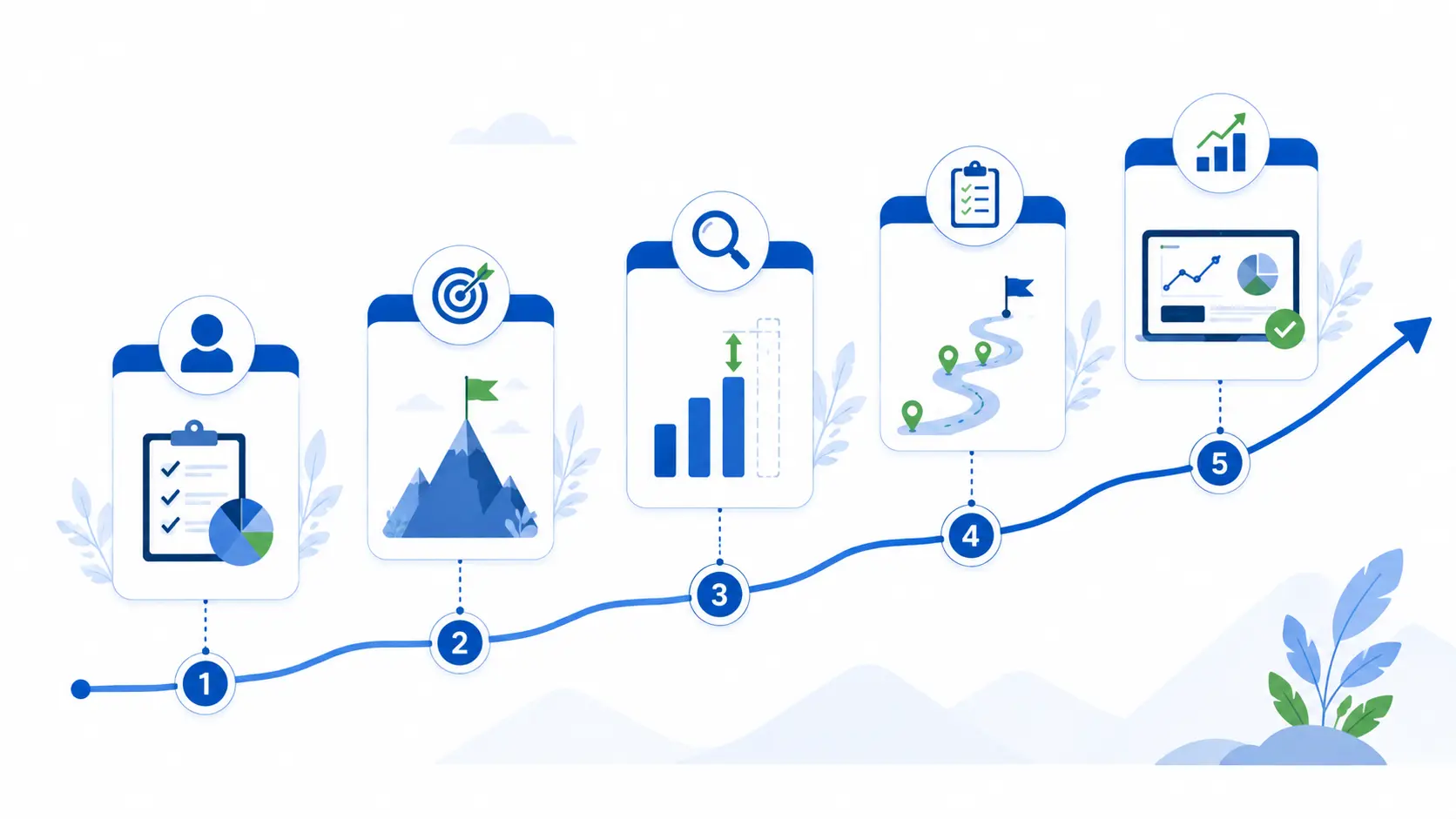
Quick answer: A career development plan is a written roadmap that moves you from your current situation to your career goal through clear steps. To build it: assess your current situation honestly, set a clear and realistic goal, discover the gap between your skills and the target job's, set a timeline to close it, then review your progress regularly. The golden rule: career growth doesn't happen by chance, but through a written plan with measurable goals you track continuously.
Introduction: Why Do Most People Stall in Their Careers?
Many employees find themselves stuck in the same place for years, feeling their career has stopped without knowing why. The truth is that most leave their career development to chance, waiting for opportunity to come on its own.
But real career growth doesn't happen by waiting — it happens by planning. A career development plan is the difference between someone who moves steadily toward their goals and someone who stays in place hoping for a change that never comes.
In this guide, you'll learn how to build a practical career development plan that moves you step by step to a better job, with clear goals and a measurable path. And building this plan starts with knowing the in-demand job market skills you'll need along the way.
What Is a Career Development Plan and Why Do You Need It?
A career development plan is a document that defines where you are now, where you want to reach, and how you'll get there. It turns your vague ambitions into tangible goals and executable steps.
Benefits of having a clear plan:
Clarity: you know exactly what you're pursuing and how to reach it.
Focus: you direct your effort and time toward what matters.
Motivation: seeing your progress pushes you to continue.
Better decisions: every step serves a bigger goal.
Without a plan, your growth becomes hostage to chance and circumstance, not your will and effort.
Step 1: Assess Your Current Situation Honestly
Every journey begins by knowing the starting point. Before planning your future, understand your present clearly and honestly.
Ask yourself:
What are my current skills and experience?
What are my strengths and where do I excel?
What are my weaknesses that hinder my progress?
Am I satisfied with my current path? And why?
Be honest in your assessment, because a clear picture of your current situation is the foundation your whole plan is built on.
Step 2: Set a Clear and Realistic Goal
A vague goal ("I want a better job") can't be planned for. Turn it into a specific, measurable goal.
Use the SMART goal criteria:
Specific: what job or position exactly?
Measurable: how will you know you achieved it?
Achievable: realistic given your circumstances.
Relevant: it serves your bigger ambition.
Time-bound: when do you want to reach it?
An example of a clear goal: "Become a digital marketing manager within 3 years." This goal can be planned and tracked.
Step 3: Discover the Gap Between Your Situation and Your Goal
Once you know where you are and where you want to reach, identify what you're missing to get there. This gap is the core of your plan.
Compare:
The skills required for the target job with your current skills.
The experience needed with your current experience.
The certifications or qualifications required with what you have.
This comparison reveals exactly what you need to develop. Define each gap clearly to know where to focus your effort.
Step 4: Set an Action Plan to Close the Gap
Now turn the gaps into practical steps with a timeline. For each gap, define how you'll close it and when.
Your plan should include:
The skills you'll learn and their learning sources.
The certifications you'll obtain and their timing.
The experiences you'll gain (projects, volunteering, extra tasks).
A timeline for each step (monthly or quarterly).
Break your big goal into small, achievable goals, because each small win brings you closer and motivates you.
Step 5: Execute and Track Your Progress
A plan without execution is just a wish. Start immediately, and track your progress regularly to stay on course.
For effective tracking:
Review your plan periodically (monthly, for example) to assess your progress.
Celebrate small wins to maintain your enthusiasm.
Adjust your plan when your circumstances or goals change.
Learn from obstacles instead of surrendering to them.
Continuous tracking turns your plan from a rigid document into a living path that evolves with you.
A Simple Career Development Plan Template
Element | Example |
|---|---|
Current situation | Marketing specialist with 2 years' experience |
Goal | Digital marketing manager within 3 years |
Gap | Leadership skills + digital marketing certification + team management experience |
Plan | Leadership course (6 months), certification (1 year), lead a small project |
Tracking | Monthly progress review |
Use this template as a starting point and adapt it to your field and specific goal.
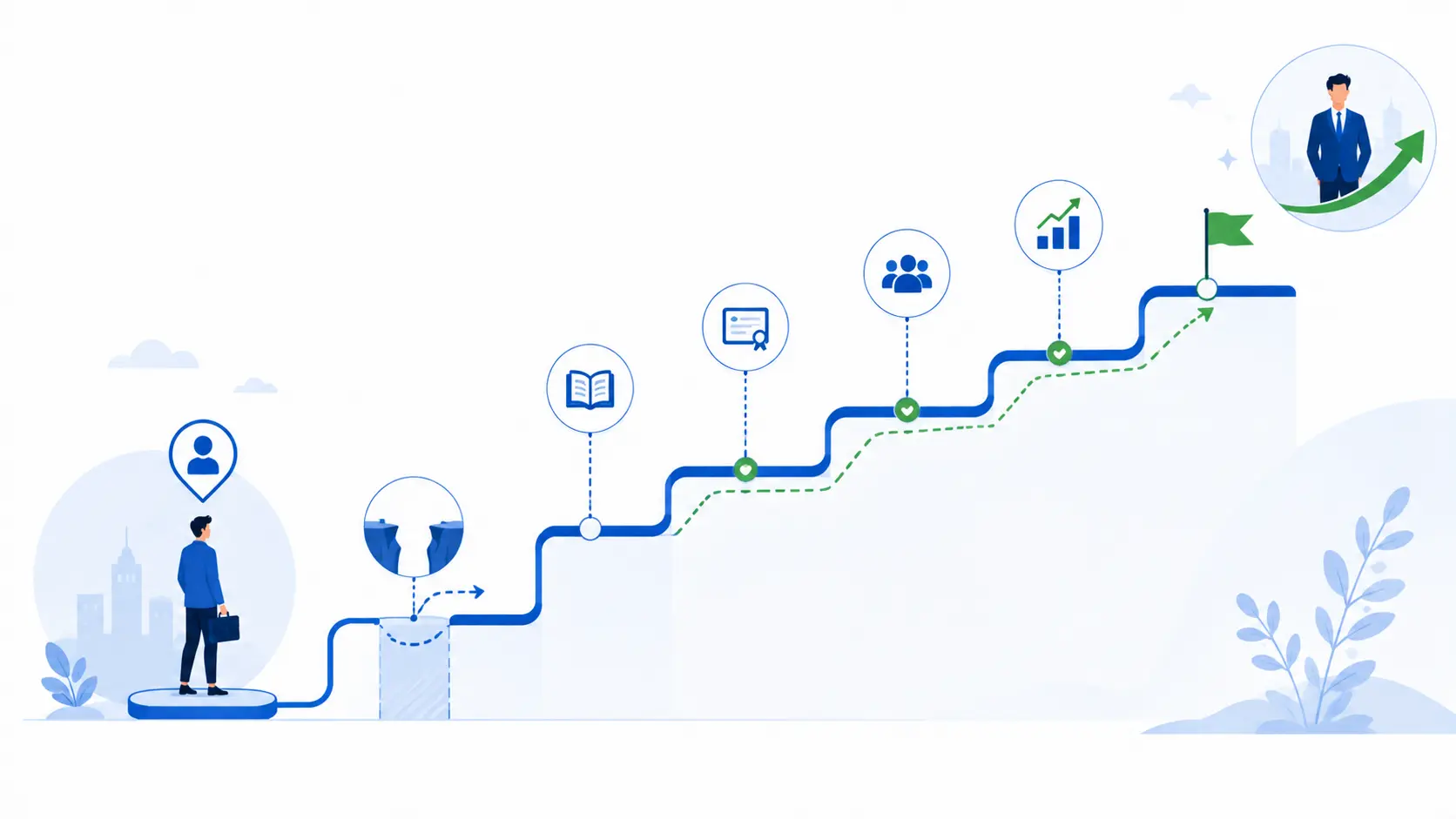
The Role of Soft Skills in Career Development
Many focus on technical skills and forget that major promotions and career moves rely heavily on soft skills like leadership, communication, and emotional intelligence.
The higher you climb the career ladder, the more important these skills become. So make developing your soft skills a core part of your plan. To dig deeper into these skills, read the guide on soft skills employers look for.
Common Mistakes in Career Planning
Vague goals that can't be measured or planned for.
An unrealistic plan that causes frustration and stopping.
Neglecting tracking and leaving the plan in a drawer.
Giving up at the first obstacle instead of adjusting the path.
Copying someone else's plan without adapting it to your circumstances.
Avoiding these mistakes makes your plan realistic and truly executable.
For professional career development tools and templates, you can refer to trusted resources such as Indeed's career development guide.
Conclusion
Career growth isn't luck or waiting for opportunities — it's a written plan you execute with determination. When you assess your situation honestly, set a clear goal, discover your gaps, set a plan to close them, and track your progress, you take the reins of your career instead of leaving it to chance.
Start today by writing your plan, even on a single page. Remember: those with successful careers don't differ from others in talent as much as in planning and commitment. A simple plan you execute beats a big ambition with no steps.
Frequently Asked Questions About the Career Development Plan
What is a career development plan?
A career development plan is a document that defines your current situation, your career goal, and the steps needed to move between them. It turns your vague ambitions into tangible, measurable, trackable goals, and gives you clarity and focus in your career.
How do I define my career goal?
Use the SMART criteria: make it specific, measurable, achievable, relevant to your ambition, and time-bound. Example: "Become a marketing manager within 3 years" is a clear goal that can be planned and tracked.
How long does building a career development plan take?
Building the plan itself may take a few hours, but executing it is an ongoing journey. What matters most isn't the speed of writing, but the realism of the goals, commitment to execution, and periodic tracking to adjust the path when needed.
Do I need to develop soft skills in my plan?
Yes, strongly. The higher you rise professionally, the more important soft skills like leadership, communication, and emotional intelligence become, as major promotions rely on them. Make developing them a core part of your plan, not a secondary aspect.
Your Practical Step Now
Don't delay. Today only:
Write your career goal in a clear, measurable (SMART) form, or
Assess your current situation and identify the biggest gap between you and your goal.
A small start today beats the perfect plan you never write.