

Quick answer: To start freelancing and find your first client: identify your sellable skill, build a portfolio that showcases it, create a professional account on freelance platforms, submit tailored and convincing proposals, and price your services smartly. The golden rule: the first client is the hardest, so focus on building trust and reputation with excellent first projects — freelancing is built on reputation, and one satisfied client opens the doors to others.
Introduction: Why Has Freelancing Become a Real Option?
Freelancing is no longer just a source of extra income, but a complete career path chosen by millions worldwide. Freelancing offers the freedom to choose projects and clients, flexibility in time and place, and the possibility of unlimited income that depends on your effort and skill.
In the Saudi and Gulf market, interest in freelancing is growing within the shift toward a skills economy, with initiatives supporting freelancers and organizing their work. This makes it a real opportunity for those with an in-demand skill seeking independence.
But the start is always the biggest challenge, especially finding the first client. In this guide, you'll learn how to start freelancing step by step, and how to get your first client and build a career from it. And many freelancing skills overlap with remote work skills.
Step 1: Identify Your Sellable Skill
Freelancing is based on offering a skill others need and pay for. Before you start, clearly identify what you're good at that can be sold as a service.
Ask yourself:
What skills do I master that can be offered as a service?
What does the market demand and pay for?
Where do my skills intersect with market needs?
Among the most in-demand freelancing fields: writing and translation, design, programming, digital marketing, social media management, and consulting. Choose a field you genuinely master, as quality is the foundation of reputation in freelancing.
Step 2: Build a Portfolio
A client doesn't buy promises, but evidence. Your portfolio is what proves your ability and convinces the client that you're the best fit. Without a portfolio, you start from scratch with every client.
To build a strong portfolio:
Show your best work related to the service you offer.
If you have no work, create sample projects that showcase your skill.
Do first projects at a symbolic price to build real work.
Organize it professionally and easy to browse.
A strong portfolio speaks for you more than any words, and shortens your path to convincing clients.
Step 3: Create a Professional Presence
The client will search for you before dealing with you. Your professional presence, whether on freelance platforms or LinkedIn, is what builds their first trust.
For a professional presence:
Create a complete account on freelance platforms suited to your field.
A professional LinkedIn profile reflecting your experience, as in the LinkedIn guide.
A professional photo and description reflecting your specialty.
A clear personal brand that sets you apart, as in the personal branding guide.
A consistent professional presence makes clients trust you before they even talk to you.
Step 4: How Do You Find Your First Client?
This is the biggest obstacle where many stop. Getting your first client needs initiative and strategy, not passive waiting.
Ways to find your first client:
Freelance platforms: submit proposals on projects suited to your skill.
Your network: tell your contacts you're available to offer your services.
LinkedIn: reach out to potential clients in your field.
Specialized groups: where project owners look for freelancers.
Direct outreach: contact companies that may need your service.
The key is initiative. The first client rarely comes to you; you have to actively search for them.
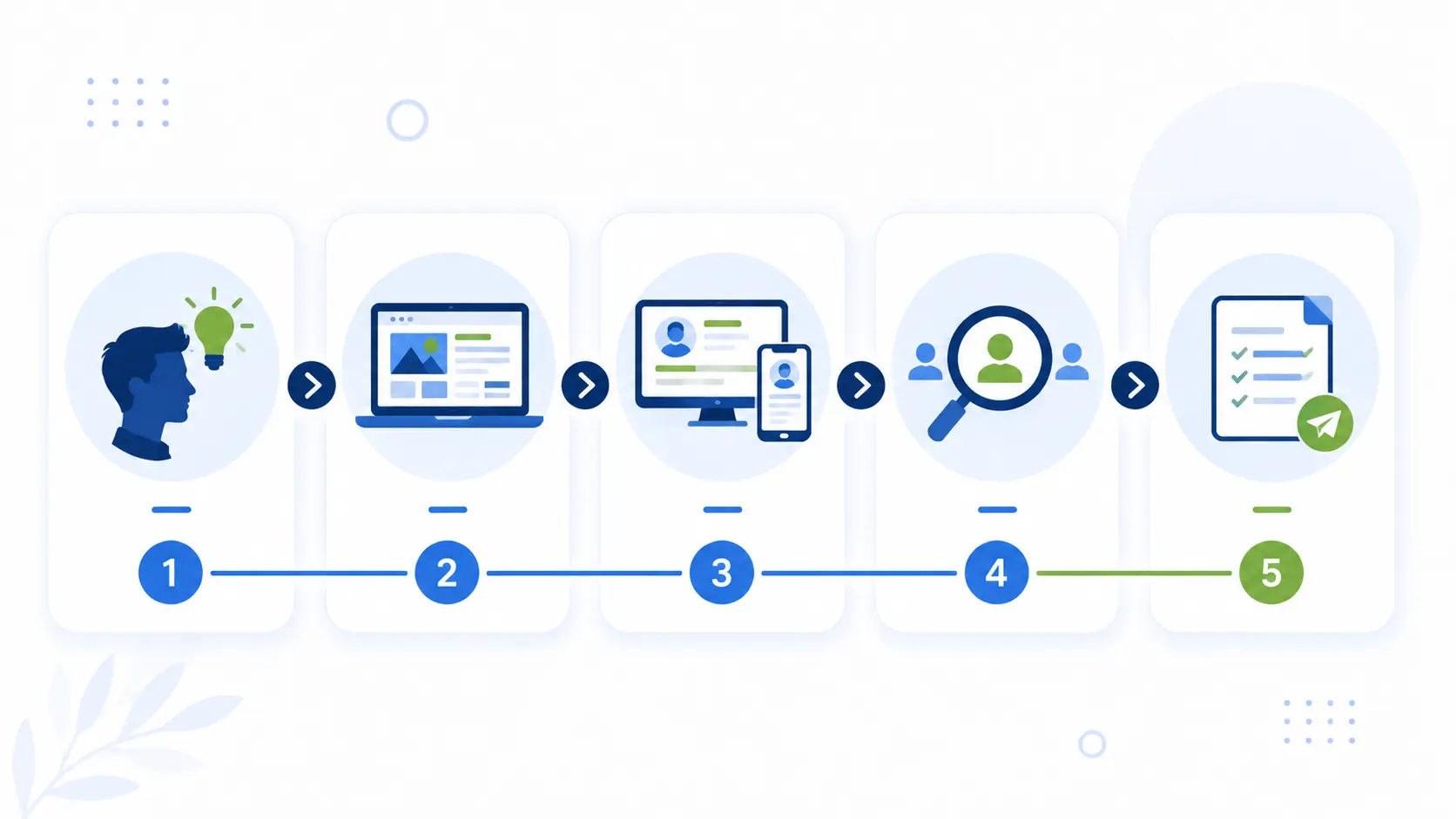
Step 5: Write Convincing Proposals
On freelance platforms, your proposal is the client's first impression. A weak generic proposal is ignored, while a tailored, convincing one opens the door.
For an effective proposal:
Tailor it to each project; don't send one text to everyone.
Show your understanding of the client's specific need.
Connect your experience to the project's requirements with examples.
Be concise, clear, and professional.
Close with a clear call to connect.
A tailored proposal shows your seriousness and interest, and sets you apart from dozens of generic, repeated proposals.
How Do You Price Your Services Smartly?
Pricing is one of the hardest challenges for beginners. A price that's too low reduces your value, and one that's too high may drive away your first clients.
For balanced pricing:
Research market prices for your service and level.
At the start, price competitively to build reputation and work.
Raise your prices gradually as your experience and reviews accumulate.
Offer value that justifies your price rather than just a low price.
Remember that the goal at the start is building reputation and reviews, after which your prices become a reflection of your growing value.
Table: Advantages and Challenges of Freelancing
Advantages | Challenges |
|---|---|
Freedom to choose projects | Unstable income especially at the start |
Flexibility of time and place | The need to constantly find clients |
Income unlimited by your effort | Responsibility of managing everything yourself |
Variety of experiences and projects | Absence of fixed job benefits |
Awareness of the challenges prepares you for them, as freelancing is great freedom that requires discipline and self-responsibility.

Common Mistakes at the Start of Freelancing
Waiting for the client instead of actively searching.
Generic proposals not tailored to each project.
Random pricing too high or too low.
Neglecting to build a real portfolio.
Accepting every project even unsuitable ones.
Weak communication with clients and lack of professionalism.
Avoiding these mistakes shortens your path to success and builds your reputation correctly from the start.
For additional professional tips on freelancing, you can refer to trusted resources such as Indeed's freelancing guide.
Conclusion
Freelancing is a promising career path that grants you freedom and independence, but its start requires initiative and patience. When you identify your skill, build a portfolio and professional presence, and actively search for your first client with convincing proposals and smart pricing, you lay a solid foundation for an independent career.
Start today with one step: identify your sellable skill or create your account on a freelance platform. Remember: the first client is the hardest, but after them everything becomes easier, because freelancing is built on reputation, and every successful project opens new doors. Start now, as the opportunity awaits those who take initiative.
Frequently Asked Questions About Freelancing
How do I start freelancing?
Identify your sellable skill, build a portfolio that showcases it, create a professional account on freelance platforms and LinkedIn, then search for your first client with tailored proposals and smart pricing. Quality and initiative are the foundation of success at the start.
How do I find my first freelancing client?
Through freelance platforms by submitting tailored proposals, your network by telling your contacts, LinkedIn by reaching out to potential clients, and specialized groups. The key is initiative and active searching, as the first client rarely comes to you without effort.
How do I price my freelancing services?
Research market prices for your service and level, price competitively at the start to build reputation and work, then raise your prices gradually as your experience and reviews accumulate. Offer value that justifies your price rather than relying on a low price alone.
Is freelancing a stable income source?
At the start, income is unstable and needs building a client base. But over time, with accumulating reputation and regular clients, it can become a stable income source that even exceeds a traditional job. Consistency and quality are the key to stability.
Your Practical Step Now
Don't delay. Today only:
Identify one sellable skill you're good at, and start preparing a work sample for it, or
Create an account on a freelance platform suited to your field.
A small start today beats the perfect independence you never begin.