

Quick answer: The most in-demand skills in the 2026 job market fall into: digital and technical skills (data analysis, AI, cybersecurity), soft skills (communication, critical thinking, adaptability), and future skills (continuous learning, creativity, leadership). The golden rule: don't rely on your degree alone — combine a strong technical skill with complementary soft skills, because today's employers look for the mix, not specialization alone.
Introduction: Why a Degree Alone Is No Longer Enough
The job market has changed radically in recent years, and competition for jobs is fiercer than ever. Holding a university degree alone no longer guarantees you a job; instead, in-demand skills are what set the accepted candidate apart from the rest.
Today's employers, especially in a Saudi market racing toward digital transformation under Vision 2030, look for employees who possess a mix of technical and human skills, able to adapt to rapid, continuous change.
In this guide, we'll review the most in-demand skills in the 2026 job market, divided into clear categories, with practical tips on how to learn and develop them. And having these skills starts with presenting them correctly in your CV.
First: Digital and Technical Skills
Digital skills have become a necessity in most jobs, not an added advantage. Even non-technical jobs now require a minimum level of digital literacy.
Among the most in-demand technical skills:
Data analysis: the ability to understand data and draw decisions from it.
AI and its tools: working with AI tools to boost productivity.
Cybersecurity: protecting information in an increasingly risky digital world.
Digital marketing: reaching audiences through digital platforms.
Programming and tech fundamentals: required in a growing number of fields.
Investing in at least one technical skill has become a necessity for any career path in 2026.
Second: Soft Skills
While technical skills open the door, soft skills are what keep you in the room and qualify you for promotion. Employers value them because they determine how you work with others and under pressure.
The most in-demand soft skills:
Effective communication: expressing clearly and listening well.
Critical thinking and problem-solving: analyzing situations and making sound decisions.
Teamwork: collaborating effectively within a team.
Time management: organizing tasks and achieving productivity.
Adaptability and flexibility: dealing with change positively.
These skills are hard to automate, which is why their value keeps rising. To dig deeper into soft skills and how to develop them, read the guide on soft skills employers look for.
Third: Future Skills
Some skills are no longer tied to a specific field but have become essential for any successful career path in a fast-changing world.
Among the most important future skills:
Continuous learning: the ability to constantly acquire new skills.
Creativity and innovation: offering new ideas and solutions.
Leadership and influence: guiding and inspiring others even without a formal position.
Emotional intelligence: understanding and managing your emotions and others'.
Cognitive flexibility: moving between different tasks and ideas.
Those who possess these skills remain in demand no matter how technologies and jobs change.
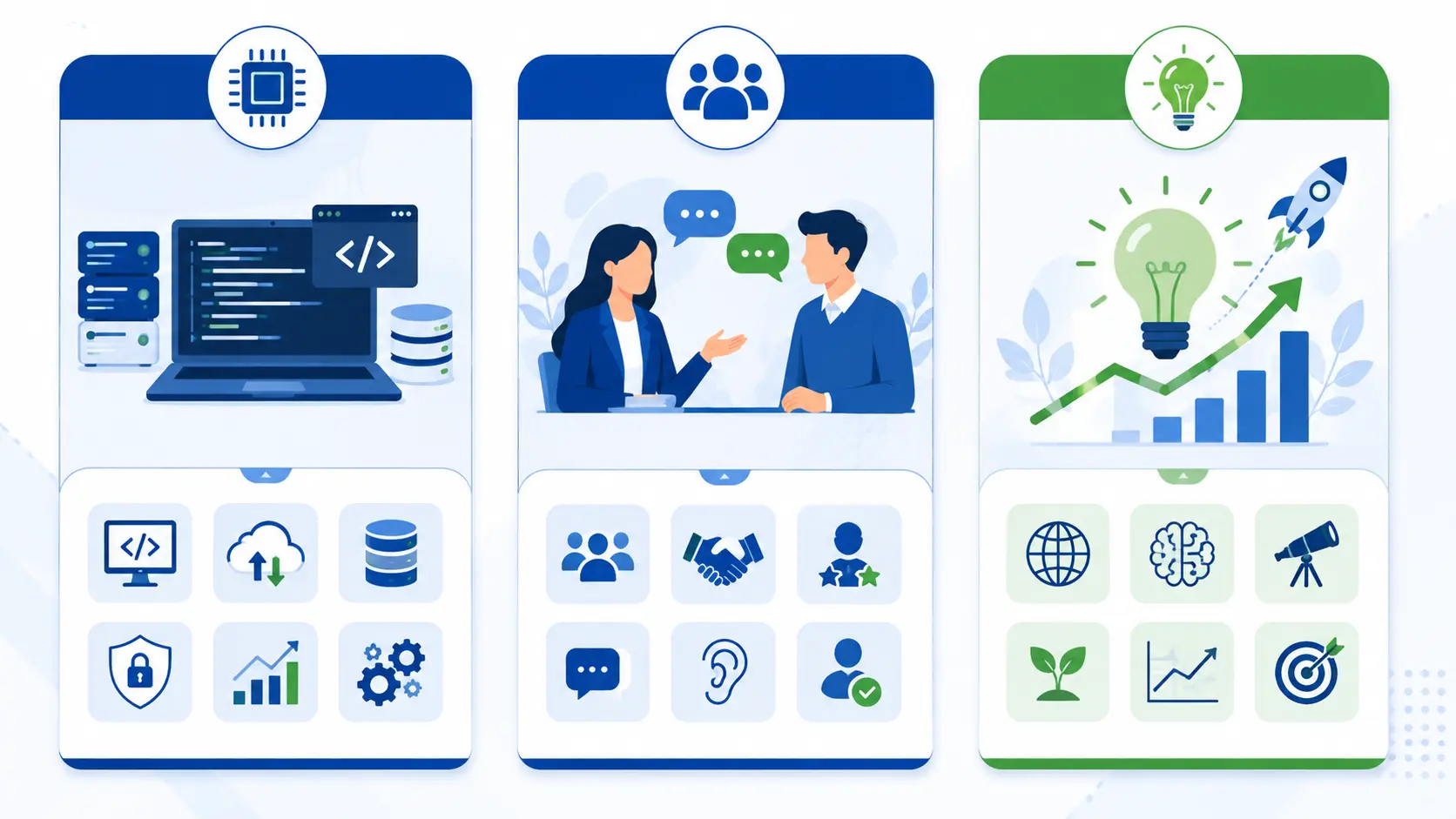
Table: In-Demand Skills and Their Domains
Skill category | Examples | Why in demand? |
|---|---|---|
Digital/technical | Data analysis, AI | Digital transformation across all sectors |
Soft | Communication, teamwork | Hard to automate, determines team success |
Future | Continuous learning, creativity | Adapting to rapid, continuous change |
This diversity shows that career success requires a balanced mix, not specialization in one aspect.
How Do You Learn These Skills?
Acquiring skills no longer necessarily requires going back to university. Today, varied sources are available:
Online learning platforms: courses in every field at varying or free prices.
Accredited professional certifications: they raise your value in your field.
Learning by doing: applying what you learn in real projects.
Following experts: learning from experienced people in your field.
Continuous reading: specialized books and articles.
The key isn't the source, but commitment and consistency in learning and applying.
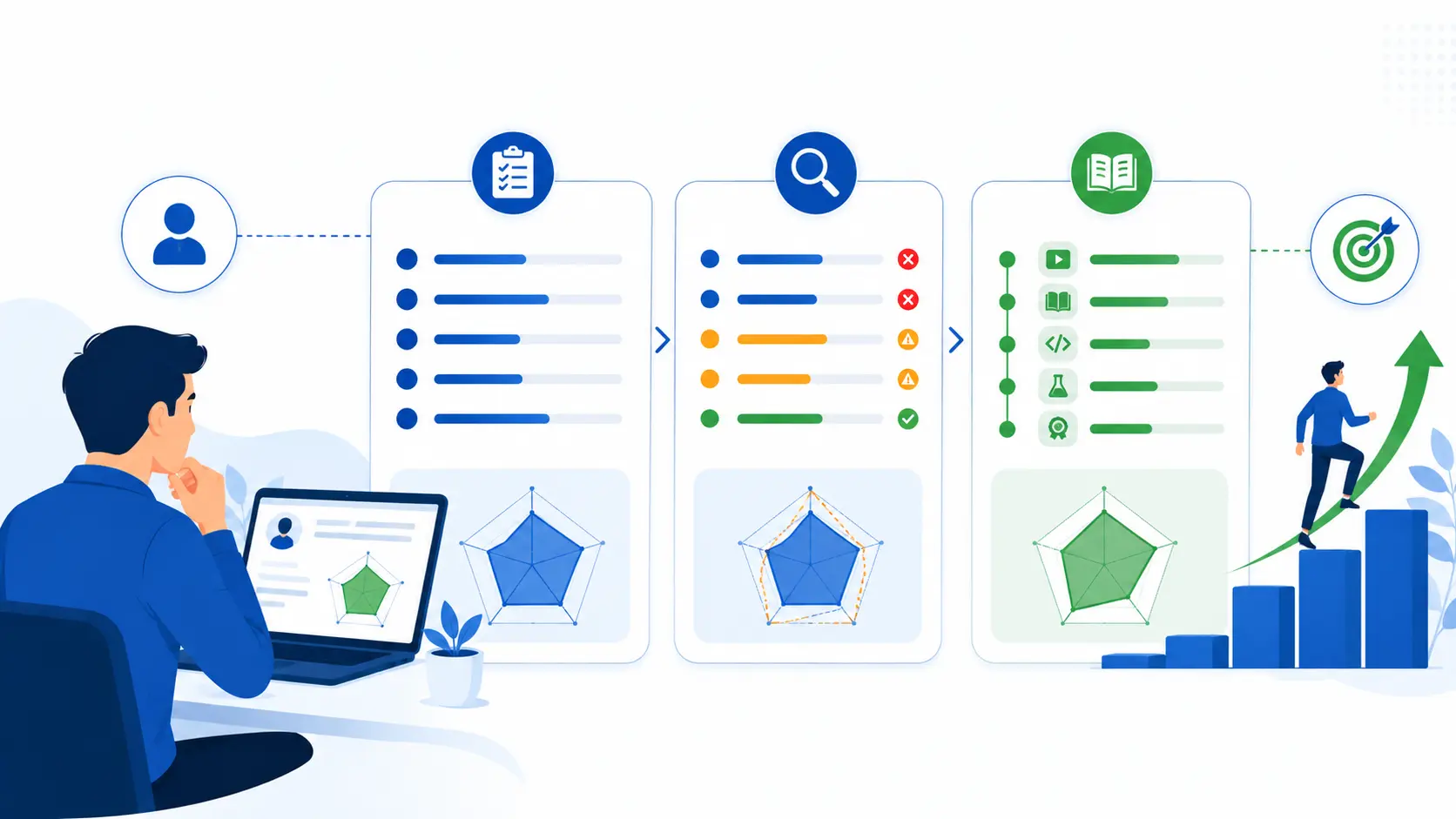
How Do You Identify the Best Skills for You?
Don't try to learn everything at once. Choose wisely with these steps:
Define your field and career goal clearly.
Research the requirements of the jobs you aspire to.
Assess your current skills and identify the gaps.
Prioritize and start with the most in-demand skill in your field.
Set a realistic timeline for learning.
This focus makes your learning directed and effective instead of scattered. And to build a complete path, read the guide on how to build a career development plan.
Common Mistakes in Skill Development
Focusing on technical and neglecting soft skills (or vice versa).
Trying to learn everything without focus or priorities.
Theoretical learning without practical application.
Stopping learning after getting a job.
Ignoring actual market requirements and learning randomly.
Avoiding these mistakes makes your investment in learning more useful and impactful on your path.
For global future-skills trends, you can refer to trusted resources such as the World Economic Forum's Future of Jobs Report.
Conclusion
The 2026 job market no longer rewards a degree alone, but a balanced mix of digital, soft, and future skills. Those who combine a strong technical skill with complementary human skills, and commit to continuous learning, remain in demand no matter how the market changes.
Start today by assessing your current skills, identify the most in-demand skill in your field, and set a plan to learn it. Remember: investing in your skills is the best investment for your professional future, and every new skill adds a competitive edge.
Frequently Asked Questions About In-Demand Skills
What are the most in-demand skills in the 2026 job market?
They fall into three categories: digital and technical skills (data analysis, AI, cybersecurity), soft skills (communication, critical thinking, teamwork), and future skills (continuous learning, creativity, emotional intelligence). The balanced mix is most important.
Are technical skills more important than soft skills?
Both are essential and complement each other. Technical skills open the door to the job, while soft skills determine your success in it and qualify you for promotion. Employers look for the mix, not one at the expense of the other.
How do I learn in-demand skills?
Through online learning platforms, accredited professional certifications, learning by doing in real projects, and following experts and continuous reading. The key is commitment and consistency in learning and applying, not the source itself.
How do I identify the best skills for my field?
Define your career goal, research the requirements of the jobs you aspire to, assess your current skills to identify gaps, then prioritize and start with the most in-demand skill in your field within a realistic timeline.
Your Practical Step Now
Don't delay. Today only:
Identify one in-demand skill in your field you don't yet have, and find a source to learn it, or
Assess your current skills and write a list of the gaps you need to fill.
A small start today beats the perfect plan that never comes.