

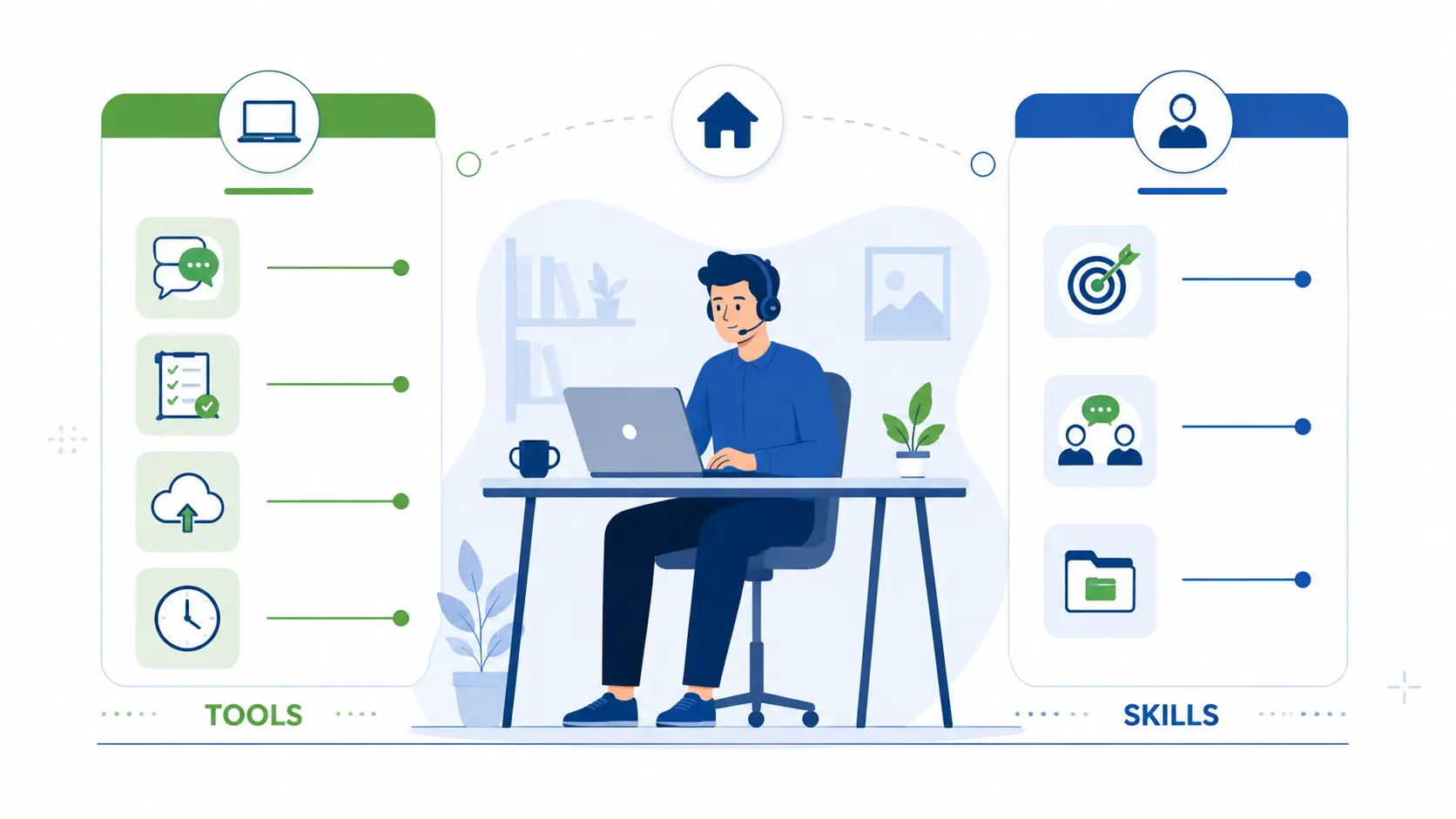
Quick answer: Success in remote work requires a mix of tools and skills: tools for communication (like messaging and meeting apps), task and project management, cloud storage, and time tracking. As for skills, the most important are self-discipline, clear written communication, time management, and technical adaptability. The golden rule: tools alone aren't enough — personal skills like discipline and organization are what make a successful remote worker, while tools are just aids.
Introduction: Why Is Remote Work a Skill in Its Own Right?
Remote work has shifted from a rare exception to one of the most important work styles in the world. Companies, including many Saudi and Gulf companies, now open their doors to talent working from anywhere, opening opportunities for employees that weren't available before.
But success in remote work doesn't happen automatically. Working from home carries its own challenges: distractions, difficulty separating life from work, and weak communication. Those who succeed at it are those who possess the right tools and the right skills together.
In this guide, you'll get to know the best remote work tools you need and the core skills that make the difference. This guide complements the complete remote work guide, because after you find the job, you need what makes you succeed at it.
First: Communication and Collaboration Tools
Communication is the biggest challenge in remote work, which is why its tools come first. A distributed team needs clear channels to stay connected and aligned.
Among the most important categories of communication tools:
Instant messaging apps: for quick daily communication between team members.
Video meeting tools: for meetings and discussions face to face virtually.
Professional email: for formal, documented communication.
Shared collaboration tools: for working on documents together at the same time.
Mastering these tools makes your communication smooth and compensates for the absence of in-person meetings.
Second: Task and Project Management Tools
Without a shared office, tracking tasks and projects becomes a challenge. Organized management tools keep it clear who does what and when.
These tools help you:
Organize tasks and distribute them clearly.
Track project progress step by step.
Set deadlines and priorities.
Collaborate transparently so everyone sees the full picture.
Using one task-management tool regularly greatly raises a distributed team's productivity.
Third: Cloud Storage Tools
In remote work, your files must be available anywhere and anytime. Cloud storage solves this problem and protects your work.
Benefits of cloud storage:
Access to your files from any device and anywhere.
Easy sharing with team members.
Automatic backup that protects you from losing work.
Synchronous collaboration on the same files.
Adopting an organized cloud storage system saves your time and protects your effort from being lost.
Fourth: Time-Tracking and Productivity Tools
When working remotely, managing your time becomes your responsibility alone. Time-tracking tools help you understand how you spend your day and improve your productivity.
These tools help you with:
Measuring the time spent on each task.
Identifying the distractions that drain your time.
Organizing focus and break periods.
Proving your work hours to clients if you're a freelancer.
Awareness of how you spend your time is the first step to improving your productivity.
Skills: What Tools Alone Don't Provide
Tools are aids, but personal skills are what create real success in remote work. Here are the most important:
1. Self-Discipline
In the absence of a direct manager and office, your self-discipline becomes your engine. The ability to start and continue without external supervision is the most important skill for a remote worker.
2. Clear Written Communication
Most remote communication is written. The ability to write clear, concise messages prevents misunderstandings and saves time. This skill is part of the core soft skills.
3. Time Management and Organization
Without an office structure, you need to organize your day yourself. Setting priorities, breaking down tasks, and avoiding procrastination are vital skills for remote success.
4. Technical Adaptability
Remote work relies on technology. The ability to learn new tools quickly and solve simple technical problems yourself saves you a lot of downtime.
5. Independence and Problem-Solving
Remotely, you can't always ask a colleague next to you. The ability to research, act, and make decisions yourself makes you a reliable, productive employee.
Table: Tools and Skills Together
Aspect | Examples | Why important? |
|---|---|---|
Communication tools | Messaging, video meetings | Compensate for the absence of in-person meetings |
Task tools | Project management | Organize distributed work |
Cloud storage | Always-available files | Access and backup |
Personal skills | Discipline, organization | Create real success |
The balance between mastering tools and developing skills is what distinguishes a successful remote worker.
How Do You Set Up an Effective Home Work Environment?
Your physical environment directly affects your productivity. To set up a good home workspace:
Dedicate a fixed corner for work away from home distractions.
Invest in a comfortable chair and desk for your health and focus.
Ensure strong, stable internet — it's the lifeline of remote work.
Provide good lighting especially for video meetings.
Separate the workspace from the rest space mentally and physically.
An organized work environment helps you enter focus mode and maintain your productivity.
Common Mistakes in Remote Work
Relying on tools and neglecting personal skills.
Weak communication and leaving the team without updates.
Absence of clear boundaries between work and personal life.
Working from places full of distractions.
Neglecting time organization and relying on mood.
Avoiding these mistakes makes your remote work experience more successful and sustainable.
For additional professional tips on remote work, you can refer to trusted resources such as Indeed's remote work guide.

Conclusion
Success in remote work isn't just having advanced tools, but a balanced mix of the right tools and strong personal skills. Tools organize your work and communication, but discipline, organization, and clear communication are what make the real difference.
Start today by assessing your tools and skills, and develop what you lack step by step. Remember: remote work is freedom and a great opportunity, but it rewards the disciplined and organized, so make yourself one of them to thrive in this growing work style.
Frequently Asked Questions About Remote Work Tools and Skills
What are the most important remote work tools?
The most important are communication tools (messaging and video meetings), task and project management tools, cloud storage, and time-tracking tools. These categories compensate for the absence of a shared office and keep distributed work organized and smooth.
What skills are needed to succeed in remote work?
The most important are self-discipline, clear written communication, time management and organization, technical adaptability, and independence in problem-solving. These personal skills are what create real success, as tools alone aren't enough.
Are tools more important than skills in remote work?
No, personal skills are more important. Tools are just aids that organize your work, but discipline, organization, and clear communication determine your real success. Master the tools, but invest more in developing your personal skills.
How do I set up a good home work environment?
Dedicate a fixed corner away from distractions, invest in a comfortable chair and desk, ensure strong and stable internet, provide good lighting, and separate the workspace from the rest space mentally and physically to help you focus and be productive.
Your Practical Step Now
Don't delay. Today only:
Assess your personal remote-work skills and identify the weakest to develop it, or
Set up a fixed work corner in your home away from distractions.
A small start today beats the perfect tools you never use.