

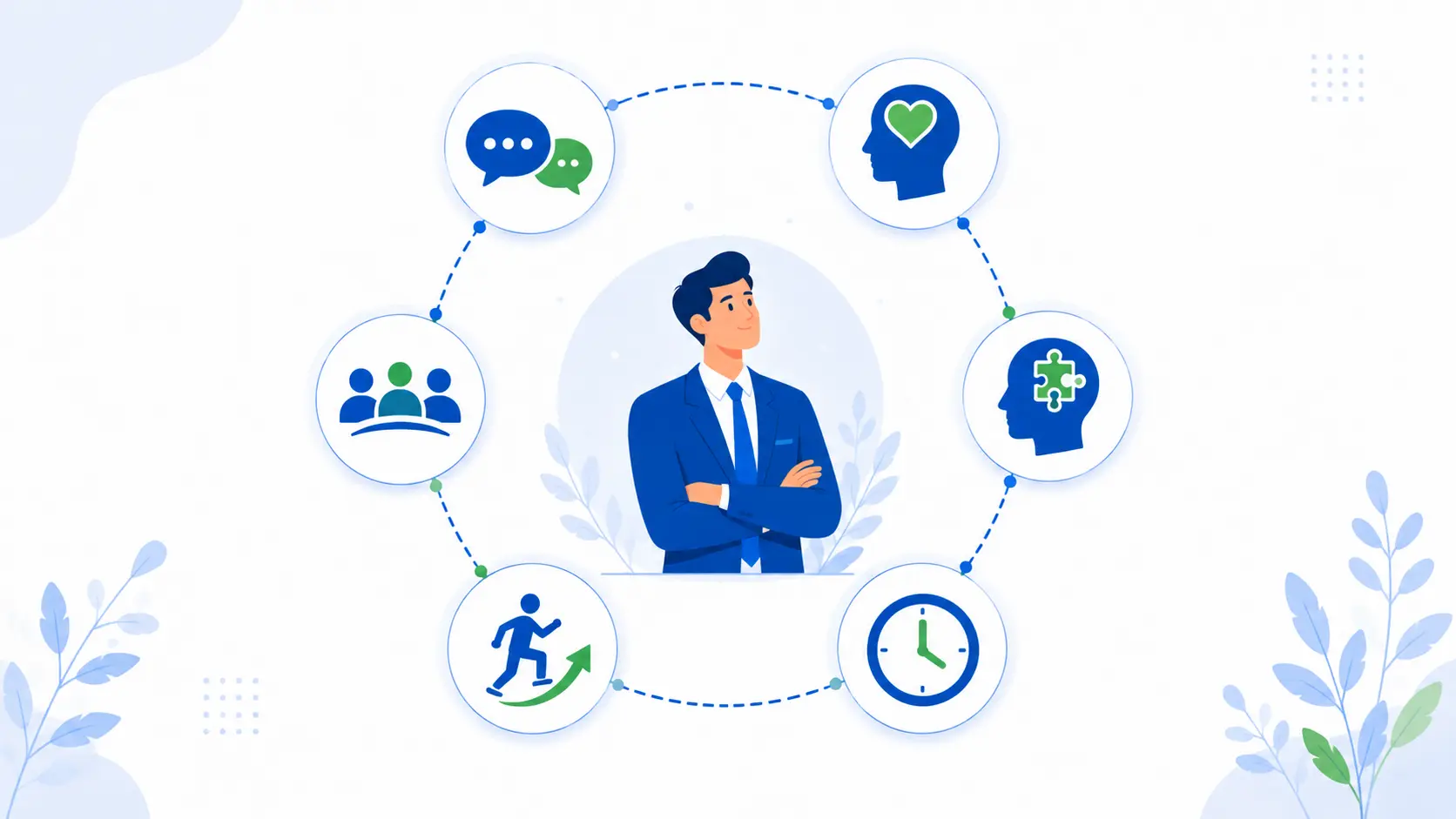
Quick answer: Soft skills are the personal abilities that determine how you deal with others and perform your work. The most important in 2026 are: effective communication, emotional intelligence, critical thinking, teamwork, adaptability, and time management. The golden rule: while technical skills open the job's door, soft skills are what qualify you for promotion and make you hard to replace — because they're purely human and hard to automate, and they distinguish a good employee from an exceptional one.
Introduction: Why Do Employers Hire Personality, Not Just the Degree?
There's a saying in hiring: "You're hired for your technical skills, and fired or promoted for your soft skills." This sums up a truth every employer knows: technical competence alone doesn't make a successful employee.
Soft skills are those personal traits that determine how you communicate, collaborate, solve problems, and handle pressure. In an era where machines take over repetitive technical tasks, these purely human skills have become the real competitive edge that's hard to replace.
In this guide, we'll dig deep into the most important soft skills employers look for in 2026, explaining each skill and how to develop it practically. And these skills are a core pillar in any successful career development plan.
What's the Difference Between Soft and Hard Skills?
Before we dig in, let's clarify the difference:
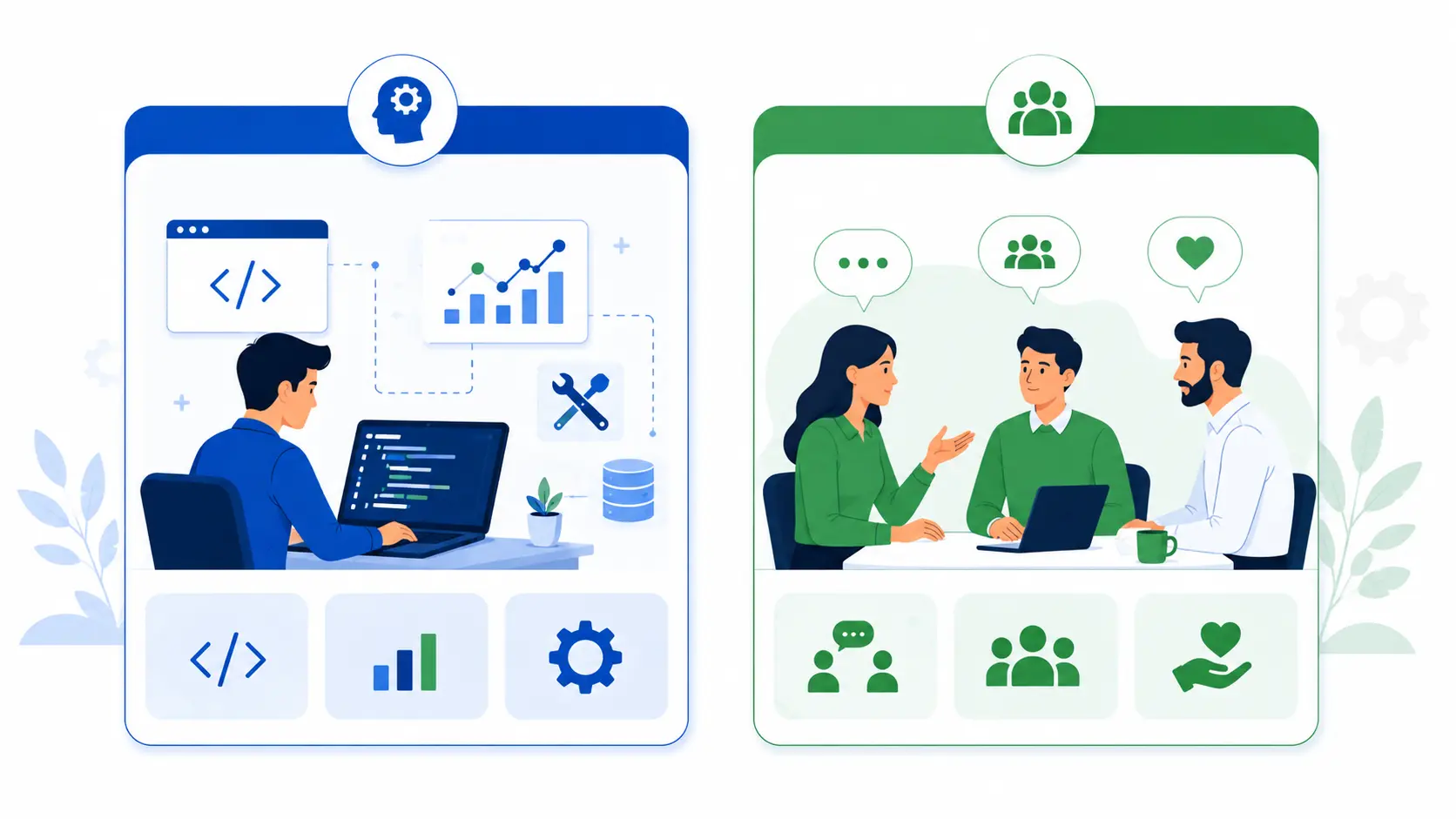
Hard skills: specific, measurable technical abilities acquired through learning and training, such as programming, accounting, or design.
Soft skills: personal and behavioral traits that determine how you work and interact, such as communication, leadership, and empathy.
The fundamental difference is that hard skills determine what you can do, while soft skills determine how you do it and with whom. Career success requires both, but soft skills are often the deciding factor when technical competence is equal.
1. Effective Communication
Communication is the foundation of every professional interaction, and it includes both expressing clearly and listening well. An employee who conveys their ideas clearly and understands others avoids misunderstandings and builds strong working relationships.
To develop your communication:
Practice active listening without interrupting.
Choose your words clearly and concisely.
Mind your body language and tone.
Ask for feedback on your communication style.
Good communication doesn't just serve your work — it also sets you apart in interviews, as with interview questions.
2. Emotional Intelligence
Emotional intelligence is your ability to understand and manage your emotions, and to recognize and deal wisely with others' emotions. It's among the most in-demand skills because it determines the quality of your professional relationships.
Emotional intelligence includes:
Self-awareness: understanding your emotions and their effect on your behavior.
Self-management: controlling your reactions under pressure.
Empathy: understanding others' perspectives and feelings.
Relationship management: building positive, productive interactions.
An employee with high emotional intelligence handles conflicts maturely and builds a healthy work environment.
3. Critical Thinking and Problem-Solving
The ability to analyze situations objectively and make sound decisions is among the most valuable skills to employers. A critical thinker doesn't accept information as is, but evaluates it and draws out solutions.
To strengthen your critical thinking:
Ask questions before accepting any information.
Analyze the problem from multiple angles.
Weigh alternatives before deciding.
Learn from the results of your past decisions.
This skill makes you an employee relied upon in difficult situations, not just an order-follower.
4. Teamwork and Collaboration
Work is rarely done entirely individually. The ability to collaborate effectively within a team, support colleagues, and contribute to a shared goal is a core skill in any work environment.
For effective teamwork:
Share your ideas and listen to others'.
Take responsibility in shared tasks.
Support your colleagues rather than competing destructively.
Handle disagreements constructively.
A collaborative employee raises the whole team's performance, which is what leaders value.
5. Adaptability and Flexibility
In a fast-changing world, the ability to adapt to new circumstances, tasks, and technologies has become a necessity, not a luxury. A flexible employee thrives in change while a rigid one stumbles.
To develop your flexibility:
Accept change as an opportunity, not a threat.
Constantly learn new skills.
Adapt to renewed work methods and tools.
Stay calm in the face of unexpected situations.
Flexibility makes you a valuable asset to any organization facing changing challenges.
6. Time Management and Organization
The ability to organize your tasks, set your priorities, and complete them on time reflects your professionalism and reliability. An organized employee accomplishes more with less stress.
To manage your time effectively:
Arrange your tasks by priority and importance.
Break big tasks into small steps.
Avoid procrastination by starting immediately.
Dedicate time to focus without distractions.
Good time management boosts your productivity, reduces your stress, and builds your employer's trust in you.
Table: Soft Skills and Their Professional Impact
Skill | Its impact at work |
|---|---|
Effective communication | Prevents misunderstandings and builds strong relationships |
Emotional intelligence | Improves relationships and conflict management |
Critical thinking | Leads to better decisions and solutions |
Teamwork | Raises the whole team's performance |
Adaptability | Helps succeed through change |
Time management | Increases productivity and reduces stress |
This diversity shows that soft skills touch every aspect of your professional performance.
How Do You Develop Your Soft Skills?
Unlike technical skills, soft skills aren't acquired through a single course, but through continuous, conscious practice:
Ask for honest feedback from your colleagues and managers.
Observe those with strong skills and learn from them.
Practice consciously in your daily situations.
Step out of your comfort zone by taking on tasks that challenge you.
Read and learn about personal development continuously.
The key is awareness and repeated practice until these skills become a natural part of your behavior.
How Do You Highlight Your Soft Skills to Employers?
Having the skill is half the equation; showing it is the other half:
In your CV: include them backed by examples, not as an abstract list, as in the CV writing guide.
In the interview: tell stories where you demonstrated these skills using the STAR method.
At work: apply them daily so your actions speak for you.
A skill you demonstrate with examples is far stronger than one you claim with words.
For the importance of soft skills in the global job market, you can refer to trusted resources such as the World Economic Forum's Future of Jobs Report.
Conclusion
Soft skills are no longer a "nice addition" — they've become the core of what distinguishes the in-demand employee in 2026. In a world where machines handle technical tasks, your abilities to communicate, empathize, think, and adapt remain your human edge that's hard to replace.
Start today by assessing your soft skills, and choose one to develop through conscious practice. Remember: technical skills may open the door for you, but soft skills are what keep you in the room and lift you higher. Invest in them, because they're an investment that doesn't age no matter how technologies change.
Frequently Asked Questions About Soft Skills
What are soft skills?
Soft skills are the personal and behavioral abilities that determine how you deal with others and perform your work, such as communication, emotional intelligence, critical thinking, and teamwork. They differ from technical skills because they're purely human and hard to automate.
Why do employers look for soft skills?
Because they determine how you work with others and under pressure, and are hard to replace with machines. Technical skills open the job's door, but soft skills qualify you for promotion and distinguish a good employee from an exceptional one in the workplace.
What is the most important soft skill in 2026?
Effective communication and emotional intelligence are among the most important, as they're the foundation of all professional relationships. But most important is having a balanced mix of soft skills that suits your work's nature and complements your technical skills.
How do I develop my soft skills?
Through continuous conscious practice: ask for feedback, observe those with strong skills, step out of your comfort zone with challenging tasks, and read about personal development. They're not acquired through a single course but through repetition until they become second nature.
Your Practical Step Now
Don't delay. Today only:
Choose one soft skill you want to develop, and ask a colleague for honest feedback about it, or
Write a real situation where you demonstrated a soft skill to use in your CV and interviews.
A small start today beats the perfect development that never comes.