

Quick answer: Body language in an interview can say more about you than your words. The most important things to watch: balanced eye contact, upright posture, a confident handshake, a natural smile, and avoiding nervous habits like fidgeting or looking away. The golden rule: your body language should reflect confidence, interest, and respect — even the best answers lose their power if accompanied by physical signals suggesting anxiety or dishonesty.
Introduction: Why Your Body Speaks Before Your Tongue
In an interview, the interviewer evaluates you not only on what you say, but on how you say it. Studies suggest that a large part of our impression of others is formed from non-verbal signals — facial expressions, tone of voice, and body movements.
This means body language can be your strongest weapon or your fatal weakness. A candidate with excellent answers but tense body language may lose the job to someone less experienced who radiates confidence and ease.
In this guide, you'll learn the common body-language mistakes that could cost you the job without realizing it, and how to avoid them to leave a confident, professional impression. This guide complements the steps in interview preparation, because your body language is an inseparable part of your performance.
Mistake #1: Weak Eye Contact
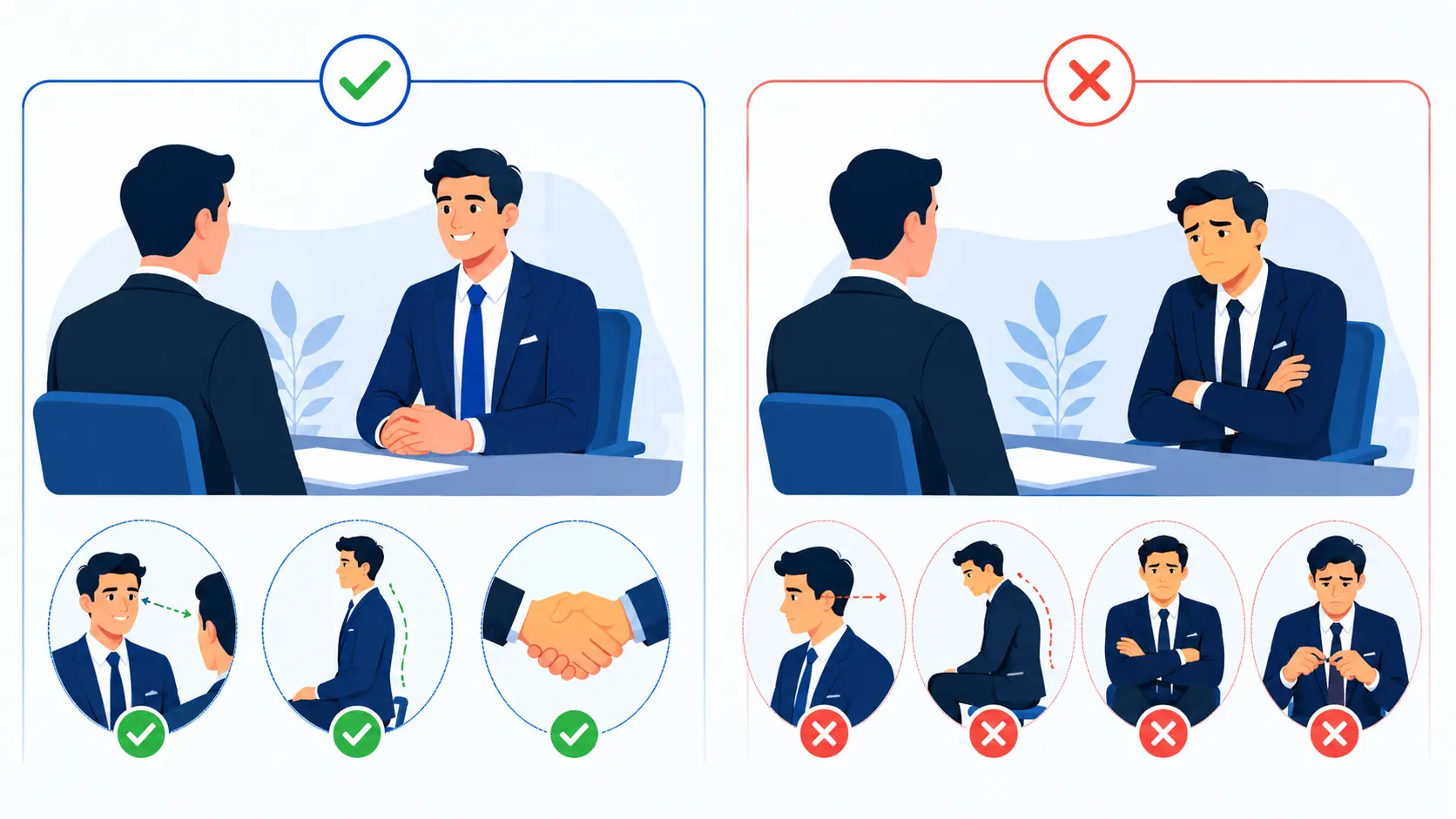
Eye contact is one of the strongest signals of confidence and honesty. Avoiding the interviewer's eyes suggests anxiety or dishonesty, while excessive staring can seem aggressive.
Balance is the key:
Maintain natural eye contact while speaking and listening.
Look at the interviewer, not the floor or the window.
In panel interviews, distribute your gaze among everyone.
Avoid constant staring that causes discomfort.
Balanced eye contact says: "I'm confident, honest, and interested in what you're saying."
Mistake #2: Slouched or Overly Relaxed Posture
The way you sit reflects your mental state and your level of seriousness. A hunched posture suggests lethargy or low confidence, while being overly relaxed can seem indifferent.
For ideal posture:
Sit upright with a natural relaxation of the shoulders.
Lean slightly forward to show your interest.
Rest your hands calmly on the table or your lap.
Avoid sprawling in the chair.
An upright, confident posture sends a professional message before you utter a word.
Mistake #3: A Weak or Overpowering Handshake
The handshake is the first physical touch in the interview, and its impression lasts. A limp handshake suggests low confidence, while a painfully strong one can seem like an attempt to dominate.
The ideal handshake:
A firm, moderate grip — neither limp nor violent.
Accompanied by eye contact and a smile.
One or two shakes, then release.
A dry, clean hand (wipe it if sweaty before entering).
A confident handshake starts the interview on the best impression.
Mistake #4: Distracting Nervous Movements
Involuntary nervous movements expose your anxiety and distract the interviewer. We often do them unconsciously, so noticing them is half the solution.
Among the most common:
Playing with a pen, papers, or phone.
Repeatedly moving your leg.
Constantly touching your face or hair.
Crossing your arms (suggests being closed off or defensive).
Biting nails or rubbing hands.
To control them: take a deep breath, keep your hands in a fixed position, and focus on the conversation instead of your movements.
Mistake #5: Inappropriate Facial Expressions
Your face is a mirror of your feelings, and its expressions are read instantly. A blank face suggests disinterest, while a tense one transfers your anxiety to the interviewer.
For appropriate expressions:
Smile naturally when greeting and at suitable moments.
Show engagement with the interviewer's words (a nod, interest).
Avoid unconscious frowning or scowling.
Keep a friendly, open face.
A genuine smile at the right moment builds a bridge of rapport and trust.
Mistake #6: Words Not Matching the Body
One of the most dangerous mistakes is saying one thing while your body language says the opposite. Asserting your confidence while avoiding eye contact, or expressing enthusiasm with a blank face, creates a contradiction the interviewer senses and that raises their doubts.
Consistency is key: make your tone, expressions, and movements support your words, not contradict them. When your verbal and non-verbal messages align, you appear honest and convincing.
Body Language in Remote Interviews
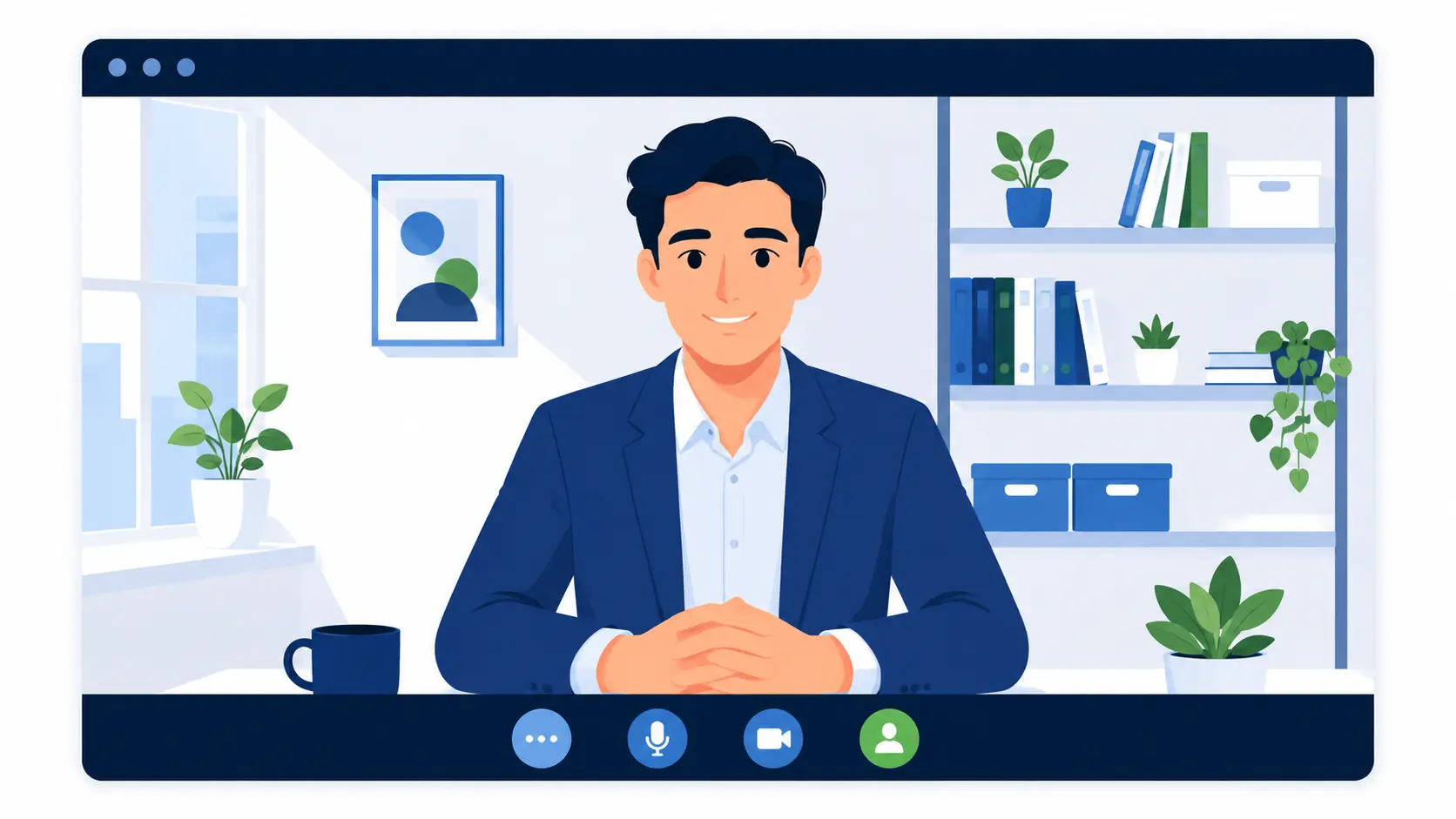
With the spread of virtual interviews, new body-language considerations have emerged in front of the camera:
Look at the camera, not the screen, to simulate eye contact.
Sit upright in a suitable frame that shows your face and shoulders.
Mind lighting and background to appear professional and clear.
Reduce excessive movement that seems distracting through the screen.
Maintain a smile and engagement, as the camera reduces the clarity of your expressions.
A remote interview doesn't cancel the importance of body language; it moves it to a new context requiring different awareness.
How to Practice Your Body Language Before the Interview
Body language is a skill you can improve with practice:
Practice in front of a mirror to notice your expressions and posture.
Record yourself on video while answering practice questions.
Ask a friend's opinion to watch your body language.
Practice deep breathing to reduce anxiety that shows physically.
Repeated practice turns confident body language from something forced into an automatic nature.
For additional professional tips on body language in interviews, you can refer to trusted resources such as Indeed's interview guide.
Conclusion
Body language isn't a minor detail in an interview — it's a parallel language that speaks about you the whole time. Balanced eye contact, confident posture, a firm handshake, and avoiding nervous movements are all signals that build a professional impression reinforcing your words.
Start today by becoming aware of your body language and practicing it before your next interview. Remember: the best answers lose their power if your body language contradicts them, while confident body language may be the touch that tips the scales in your favor over your competitors.
Frequently Asked Questions About Body Language in Interviews
What is the most important element of body language in an interview?
Balanced eye contact is one of the most important elements, because it reflects confidence, honesty, and interest. Maintain a natural gaze while speaking and listening, and avoid looking away or excessive staring that causes discomfort.
How do I handle anxiety that shows in my body language?
Practice deep breathing before entering, keep your hands in a fixed position to avoid nervous movements, and focus on the conversation instead of your movements. Good preparation reduces the anxiety that automatically reflects on your body.
Is body language important in remote interviews?
Yes, but it requires different awareness: look at the camera not the screen, sit upright in a suitable frame, mind lighting and background, and maintain a smile and engagement because the camera reduces the clarity of your expressions.
Can body language be improved with practice?
Yes, body language is a skill that improves with practice. Practice in front of a mirror, record yourself on video, ask a friend's opinion, and practice deep breathing. Repetition turns confident body language into an automatic nature.
Your Practical Step Now
Don't delay. Today only:
Practice a confident handshake, upright posture, and balanced eye contact in front of a mirror, or
Record yourself on video answering a question and notice your nervous movements to correct them.
A small start today beats the perfect preparation that never comes.