

Quick answer: The most common interview questions revolve around: introducing yourself, why you want the job, your strengths and weaknesses, your achievements, how you handle pressure and conflict, and where you see yourself in the future. The golden rule: don't memorize canned answers — prepare main ideas backed by real examples from your experience, and use the STAR method (Situation, Task, Action, Result) for behavioral questions. A structured, number-backed answer leaves a far stronger impression than generic talk.
Introduction: Why Expected Questions Are Your Golden Opportunity
The good news about job interviews is that most revolve around expected, recurring questions. This means you can prepare for them in advance and turn them from a source of anxiety into an opportunity to present your best.
The problem is that many enter the interview unprepared, improvising confused answers to questions they could have easily anticipated. Meanwhile, the prepared candidate answers with confidence and clarity, because they thought through their answers before being asked.
In this guide, we'll review the top 20 most common interview questions, explaining what the interviewer wants to hear and how to phrase your answer professionally. This guide complements the steps in complete interview preparation, so use them together as your toolkit for success.
Before the Questions: Master the STAR Method
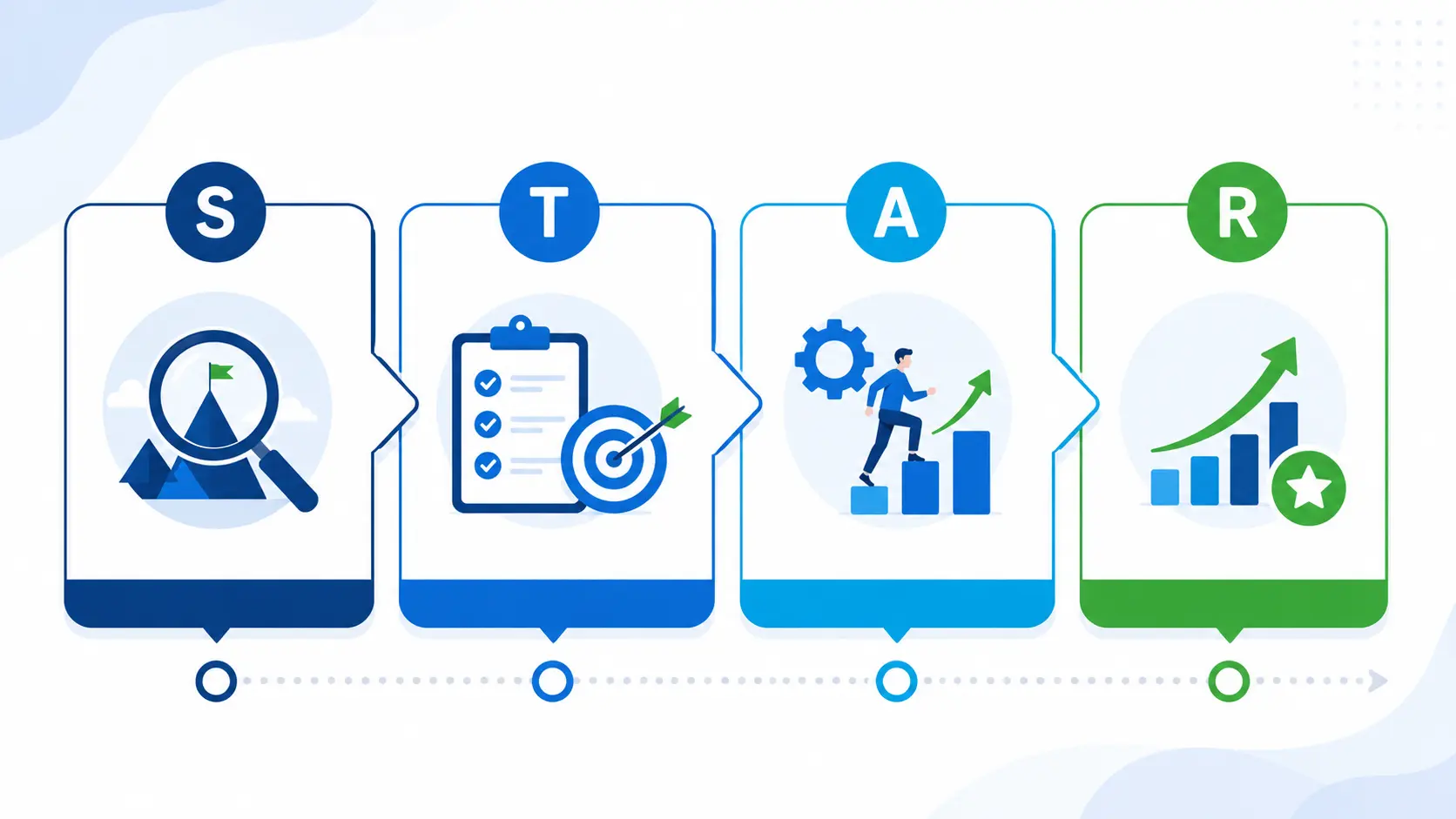
Before we begin, learn one tool you'll use for most behavioral questions. The STAR method helps you build a structured, convincing answer:
Situation: briefly describe the context.
Task: what was required of you?
Action: what did you specifically do?
Result: what was the outcome, ideally with numbers?
This method turns your answers from generic talk into evidence-backed success stories.
Introduction and Opening Questions
These questions open the interview, and the first impression here is decisive.
1. Tell Me About Yourself
Don't recite your whole CV. Give a one-minute professional summary: who you are, your top experience, and what qualifies you for this job. Tie your answer to the target role.
2. Why Do You Want to Work With Us?
Here your company research shows. Mention what specifically attracts you to the company (its values, projects) and connect it to your career goals. Avoid generic answers that fit any company.
3. What Do You Know About Our Company?
A chance to show your preparation. Mention real information about its business and achievements, and how it aligns with your interests.
Strengths and Weaknesses Questions
Among the most repeated and important questions.
4. What Are Your Strengths?
Choose strengths relevant to the job and back them with a real example. Don't just say "organized" — mention a situation where your organization showed and its result.
5. What Are Your Weaknesses?
Be honest but smart. Mention a real, minor weakness, and most importantly explain what you're doing to improve it. This shows self-awareness and a desire to grow.
6. What Is Your Biggest Achievement?
Choose a standout achievement and tell it in STAR style, focusing on the numerical result and its impact.

Behavioral Questions (The Most Important)
These questions reveal how you actually behave, not how you claim to. Use STAR in every answer.
7. Tell Me About a Time You Faced a Big Challenge
Choose a real challenge and show how you handled it and the positive result you achieved.
8. How Do You Handle Work Pressure?
Give a real example of a stressful situation you managed successfully, mentioning the methods you used to maintain your performance.
9. Tell Me About a Conflict With a Colleague and How You Resolved It
The interviewer looks for your communication and conflict-resolution skills. Focus on the resolution and maturity, not blame.
10. Give Me an Example of Working in a Team
Show your ability to collaborate and how you contributed to a group success, highlighting your role without diminishing others.
11. Tell Me About a Time You Failed
Be honest, and focus on what you learned from the failure and how you improved afterward. Learning from mistakes is a trait employers value.
Motivation and Future Questions
These questions reveal your ambition and level of commitment.
12. Where Do You See Yourself in 5 Years?
Show realistic ambition that aligns with the company's path. Avoid exaggerated or vague answers.
13. Why Did You Leave Your Previous Job?
Always be positive. Focus on seeking new growth opportunities, and never speak negatively about your previous employer.
14. What Motivates You at Work?
Connect your motivations to the nature of the job. Whether it's challenge, learning, or achieving results, show that what motivates you serves the role.
15. Why Should We Hire You?
Summarize your unique value: the mix of your skills, experience, and what you offer. This is your chance to sell yourself with confidence, not arrogance.
Technical and Practical Questions
16. What Are Your Salary Expectations?
Research the average salary for the role in the Saudi market in advance. Offer a reasonable range rather than a fixed number, and show flexibility while knowing your worth.
17. Are You Willing to Work Under Pressure or Extra Hours?
Be honest and realistic. Show your commitment and flexibility without committing to what you can't fulfill.
18. How Do You Keep Up With Developments in Your Field?
Mention your sources of continuous learning: courses, reading, following experts. This shows your passion and eagerness to develop.
Closing Questions
19. Do You Have Any Questions for Us?
Never say "no." Ask smart questions about the role, challenges, and growth opportunities — this shows your seriousness and genuine interest.
20. When Can You Start?
Be clear and realistic based on your current situation. If you're employed, mention the required notice period professionally.
General Tips for Answering Professionally
Don't memorize verbatim: prepare ideas, not rigid scripts that seem artificial.
Back it with examples: every important answer needs a real example.
Use numbers: measurable results are far stronger.
Be concise: a focused answer beats a dull, drawn-out one.
Stay positive: even in tough questions, choose a constructive angle.
For additional examples of interview answers, you can refer to trusted resources such as Indeed's interview guide.
Conclusion
Most interview questions are predictable, which means success in them is a matter of preparation, not luck. When you prepare your answers to the top 20 most common questions, backed by real examples using the STAR method, you enter the interview with a confidence that makes the difference.
Start today by preparing your answers to the most important of these questions, and practice them aloud. Remember: a structured, evidence-backed answer leaves a mark that stays in the interviewer's mind and may be the difference between your acceptance and rejection.
Frequently Asked Questions About Interview Questions
What is the most common interview question?
One of the most common is "tell me about yourself," which interviewers often open with. Answer it with a focused one-minute professional summary connecting your experience to the job, not by reciting your entire CV.
What is the STAR method of answering?
STAR is a method for building structured answers to behavioral questions: Situation, Task, Action, and Result. It turns your answer from generic talk into a success story backed by numbers and evidence.
How do I answer the weaknesses question?
Mention a real, minor weakness, and most importantly explain what you're doing to improve it. This shows self-awareness and a desire to grow. Avoid artificial answers like "I'm too much of a perfectionist."
How do I answer salary expectation questions?
Research the average salary for the role in advance, and offer a reasonable range rather than a fixed number. Show flexibility while knowing your worth, and don't set a figure that's too low or unrealistically high.
Your Practical Step Now
Don't delay. Today only:
Prepare your answer to "tell me about yourself" in a focused one minute, or
Write a real example from your experience in STAR style for an expected behavioral question.
A small start today beats the perfect preparation that never comes.